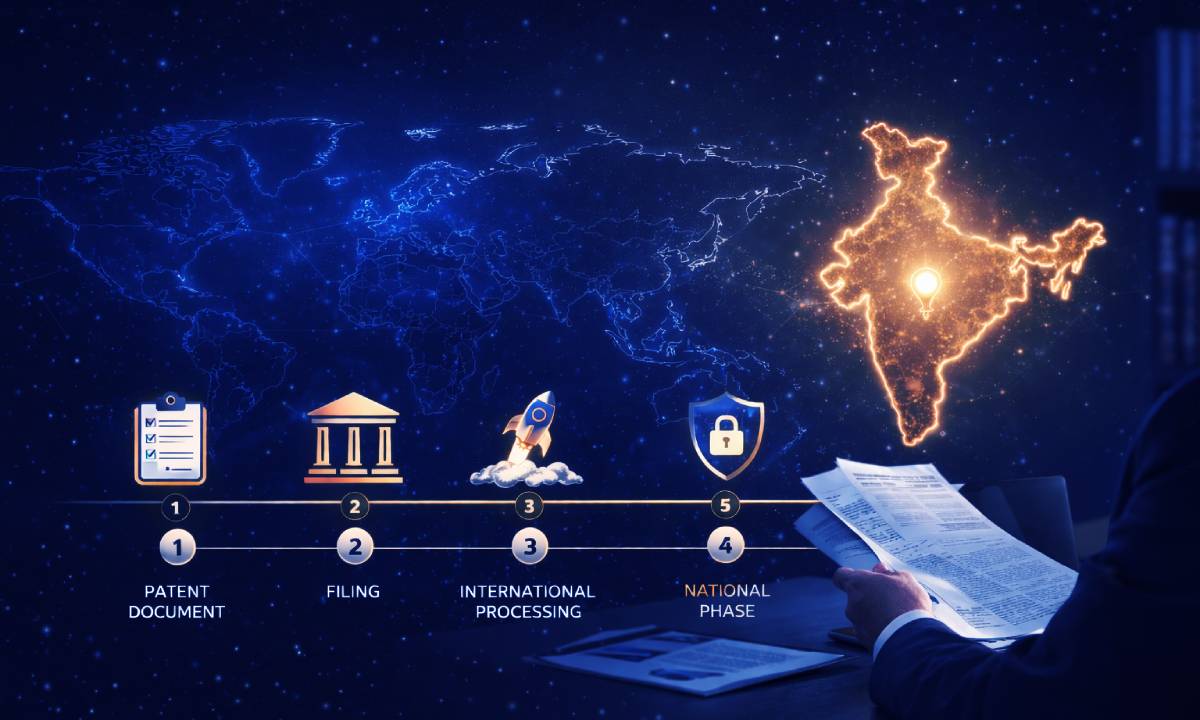
Expanding patent protection beyond national borders is a strategic decision for innovators and growing businesses. PCT Patent Filing in India enables applicants to seek protection in multiple countries through a single international application while preserving their priority date. For Indian inventors, start-ups, and research institutions, understanding the procedural framework is essential before entering global markets.
This comprehensive guide explains the legal basis, eligibility criteria, documentation, fees, timelines, and post filing stages involved in PCT Patent Filing in India. The structure follows established procedural guidance issued by statutory authorities and reflects best practices followed by leading intellectual property professionals.
Understanding the Legal Framework
The Patent Cooperation Treaty is administered by the World Intellectual Property Organization. India is a contracting state to the Treaty. The domestic provisions governing international applications are contained in the Patents Act and the Patent Rules.
In India, the competent authority for receiving and processing international applications is the Office of the Controller General of Patents, Designs and Trade Marks. Official notifications, forms, and procedural manuals are available on the Office of the Controller General of Patents, Designs and Trade Marks website.
The PCT system does not grant an international patent. It creates a unified filing procedure. Final patent grants are issued by national or regional patent offices after examination.
What Is PCT Patent Filing in India
PCT Patent Filing in India
PCT Patent Filing in India refers to filing an international patent application under the Patent Cooperation Treaty through the Indian Patent Office as a Receiving Office. This route allows applicants to seek protection in over 150 member countries while deferring substantial foreign filing costs. Indian applicants may file a PCT application either after filing a domestic application claiming priority or directly as a first filing, subject to foreign filing licence requirements under Indian law.
Step One Determine Eligibility and Filing Strategy
Before initiating the process, applicants must confirm eligibility. An applicant can file through the Indian Patent Office if at least one applicant is a resident or national of India. If the invention was conceived in India, a foreign filing licence may be required unless six weeks have passed since filing a domestic patent application. The relevant legal provisions are available in the Patents Act accessible through official government sources.
At this stage, inventors must decide whether to file a provisional application first or proceed with a complete specification. A provisional filing secures an early priority date. The PCT application must be filed within twelve months of the first filing to claim priority.
Step Two Prepare the Application Documents
Preparation of documents is a critical stage. The PCT application must include the following:
- A request form
- A complete specification including description, claims, abstract, and drawings
- Details of inventors and applicants
- Priority documents if applicable
The specification must clearly disclose the invention and support the claims. Insufficient disclosure may lead to objections during international search or national examination. Drafting requires precision. Broad claims without adequate technical backing may weaken enforceability later. Many applicants engage experienced professionals during this phase to ensure compliance with both Indian law and international standards.
Step Three Filing with the Receiving Office
PCT Patent Filing in India can be completed electronically through the Indian Patent Office online portal. Filing may also occur via WIPO electronic systems where permitted. The Indian Patent Office acts as the Receiving Office and transmits the application to the International Bureau of WIPO. Upon successful submission, an international filing date is accorded if formal requirements are satisfied. Official forms and procedural instructions are accessible through the Patent Rules and Manual of Practice published by the government.
Step Four International Search Report
After filing, the application is assigned to an International Searching Authority. For Indian applicants, recognised authorities may include the Indian Patent Office or other competent authorities designated under the Treaty. The search authority conducts a prior art search and issues an International Search Report along with a written opinion on patentability. This report assesses novelty, inventive step, and industrial applicability. The written opinion provides an early indication of strengths and weaknesses. Applicants may amend claims in response to objections raised during this stage.
Step Five International Publication
Eighteen months from the earliest priority date, the application is published by WIPO. Publication makes the invention publicly accessible. From this point, provisional rights may arise in certain jurisdictions, subject to local law. Publication details are available on the WIPO database, which enhances transparency and enables global visibility of patent applications.
Step Six Optional International Preliminary Examination
Applicants seeking deeper review may request International Preliminary Examination. This step is optional but useful where significant objections were raised in the search report.
The Preliminary Examination Authority issues a report evaluating amended claims. While not binding on national offices, it can influence later examination stages.
Step Seven National Phase Entry
The final stage of PCT Patent Filing in India involves entering the national phase in selected countries. This must usually occur within thirty or thirty-one months from the earliest priority date. During national phase entry, applicants submit translations, pay national fees, and appoint local agents where required. Each country then examines the application under its domestic law. For example, entry in the United States is handled by the United States Patent and Trademark Office, while European applications proceed before the European Patent Office. Failure to enter the national phase within prescribed timelines results in loss of rights in that jurisdiction.
Fees Involved in PCT Patent Filing in India
Costs generally include the international filing fee, search fee, and transmittal fee payable to the Indian Patent Office. Additional costs arise during preliminary examination and national phase entry. Fee reductions may be available for individual applicants or small entities, subject to eligibility conditions. Applicants should verify current fee schedules on the official government portal. Budget planning is essential since national phase costs can significantly exceed international stage expenses.
Strategic Advantages for Indian Applicants
PCT Patent Filing in India provides several strategic benefits. It offers extended time to evaluate commercial viability before committing to multiple foreign filings. It enhances credibility during investor due diligence. It provides a structured search report which helps refine patent claims. For technology start-ups and research driven enterprises, this system aligns with phased funding cycles and international expansion strategies.
Professional guidance at early stages often reduces long term risks. Consulting the international patent attorney for Registration of global applications can assist with jurisdiction selection, compliance review, and claim structuring. Later, when entering national phases or managing prosecution, engaging the best patent attorneys in India may strengthen representation before domestic authorities.
Common Errors to Avoid
Applicants sometimes miss the twelve-month priority deadline. Others misunderstand the foreign filing licence requirement. Inadequate drafting remains a frequent issue, especially in complex technical fields such as biotechnology or artificial intelligence. Another common error involves selecting too many jurisdictions without commercial analysis. Patent protection should reflect market strategy, manufacturing plans, and licensing opportunities. Timely monitoring of deadlines is crucial. International and national phase timelines are strict and rarely condoned.
Practical Compliance Tips
Maintain detailed invention records. Ensure assignment agreements transfer rights from inventors to the applicant entity. Execute non-disclosure agreements before public disclosure. Avoid presenting the invention at conferences or publishing research before filing. Public disclosure may destroy novelty in many jurisdictions. Regularly review procedural updates issued by the Indian Patent Office to remain compliant with evolving regulations.
Conclusion
PCT Patent Filing in India offers a structured and internationally recognised route for protecting inventions across multiple jurisdictions. The process involves careful planning, accurate documentation, compliance with statutory timelines, and strategic national phase decisions. For Indian innovators aiming at global markets, working with the best patent attorneys in India and adopting a well executed PCT strategy transforms intellectual creativity into legally enforceable commercial assets. Careful preparation, informed decision making, and timely action remain the foundations of successful international patent protection.
FREQUENTLY ASKED QUESTIONS (FAQS)
What is PCT Patent Filing in India?
It is the process of filing an international patent application under the Patent Cooperation Treaty through the Indian Patent Office as a Receiving Office.
Is a PCT application equivalent to a global patent?
No. It is a procedural mechanism. Final patents are granted by individual national or regional patent offices.
How long does the PCT process take?
The international phase generally lasts up to thirty months from the priority date before national phase entry is required in most countries.
Can I file a PCT application without filing in India first?
The international phase lasts up to 30 a
Yes, provided eligibility conditions are met. However, foreign filing licence requirements must be observed if the invention originated in India.
or 31 months from priority date before national phase entry is required.
What is the advantage of filing through the PCT route?
It preserves priority rights in multiple countries, defers major foreign filing costs, and provides an international search report before entering national phases.
How much does PCT Patent Filing in India cost?
Costs vary depending on applicant status, number of claims, and selected search authority. National phase expenses are additional and often substantial.
Is professional assistance mandatory?
Legal representation is not always mandatory during the international phase. However, professional drafting and strategy significantly improve the strength and enforceability of patent rights.