Many inventors and start-up founders often ask whether they can file PCT application documents on their own without engaging legal professionals. The answer is legally straightforward yet practically nuanced. International rules permit individuals to submit an application independently, provided procedural requirements are satisfied. However, the complexity of patent drafting, international compliance, and long term commercial strategy means professional guidance often plays a decisive role in securing strong protection.
The global patent system operates under the framework administered by the World Intellectual Property Organization. This organisation provides tools, forms, and guidance for applicants who wish to pursue international patent protection. Understanding the legal structure and procedural obligations helps applicants make informed decisions about whether self filing is suitable for their situation.
This article explains the legal position, practical challenges, advantages, and risks involved when choosing to file a PCT application without a lawyer. The content reflects widely accepted guidance from leading intellectual property authorities and government resources.
Can You File PCT Application Without Professional Assistance
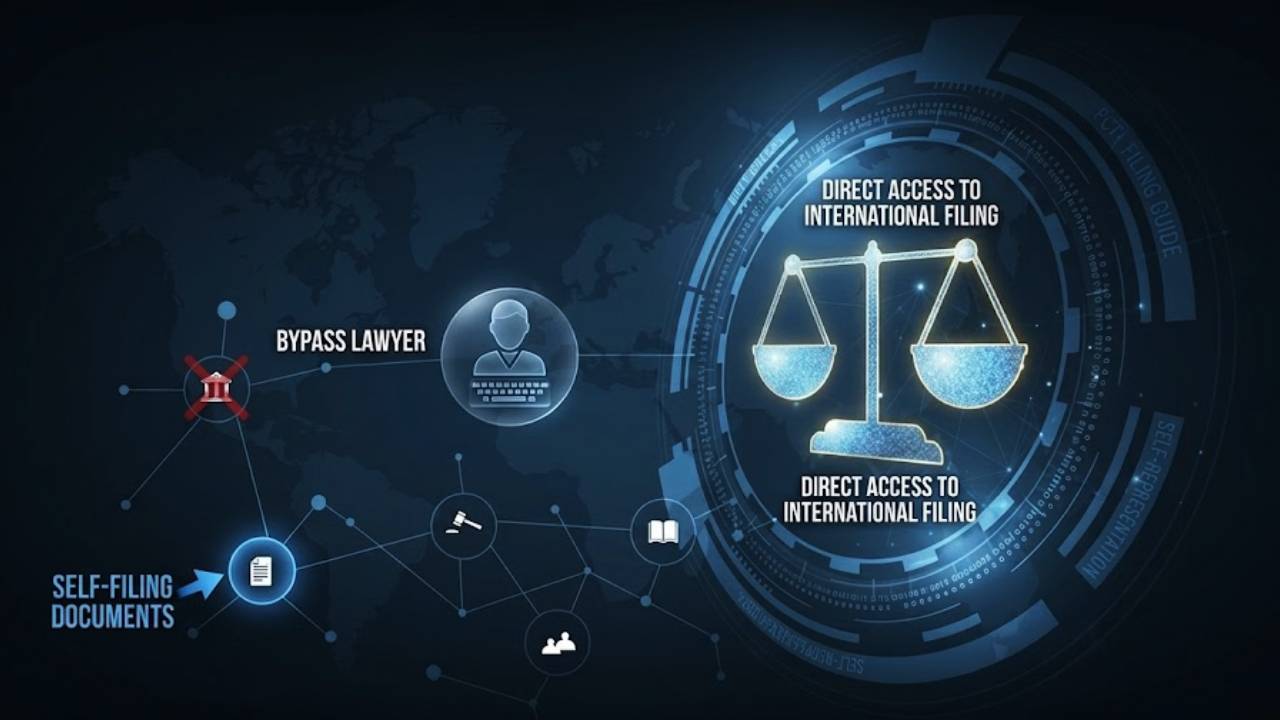
International patent law does not require applicants to hire a lawyer in every situation. Individuals, companies, universities, and research institutions may submit applications directly through recognised receiving offices. These offices include national patent authorities such as the Indian Patent Office or regional organisations such as the European Patent Office.
The ability to self file exists because the Patent Cooperation Treaty aims to provide accessible protection for innovators worldwide. Official online systems allow applicants to prepare and submit forms, pay fees, and track application progress. However, the absence of a legal requirement does not mean professional support lacks value. Patent rights depend heavily on the quality of technical drafting, claim structure, and legal compliance. Even minor errors in wording may limit protection or create enforcement challenges in future disputes. Applicants should therefore evaluate both legal and commercial considerations before deciding to proceed independently.
Legal Framework Governing Self Filing of PCT Applications
The Patent Cooperation Treaty establishes uniform procedures for international patent filings. It sets out rules for submission, examination, and publication of applications. These rules apply equally to individuals and professional representatives. The World Intellectual Property Organization provides detailed procedural manuals, electronic filing systems, and guidance materials accessible to the public. These resources enable applicants to complete formal requirements without mandatory legal representation.
In India, statutory provisions under the Patents Act permit applicants to file directly or through authorised agents. Official guidance issued by the Office of the Controller General of Patents, Designs and Trade Marks outlines filing procedures, documentation standards, and fee schedules. Such transparency supports innovation and encourages participation in the global patent system.
Steps Required to File a PCT Application Independently
Filing a PCT application without professional assistance involves several structured steps. Each step must comply with international rules and national regulations. Applicants begin by preparing a detailed patent specification describing the invention in clear technical language. This document includes claims defining the scope of protection, drawings illustrating the invention, and an abstract summarising key features. The application must then be submitted to an authorised receiving office. After submission, an International Searching Authority conducts a prior art search and issues a written opinion on patentability.
The application is subsequently published, usually after eighteen months from the priority date. Following publication, applicants may request further examination or proceed toward national phase entry in selected countries. Although these steps appear straightforward in theory, practical execution requires careful attention to legal and technical details.
Technical Challenges Faced by Self Filing Applicants
Drafting patent claims remains one of the most demanding aspects of the application process. Claims define the legal boundaries of protection and determine whether competitors can replicate the invention without infringement. Self filing applicants often struggle to balance technical clarity with legal precision. Overly broad claims may be rejected during examination. Excessively narrow claims may fail to provide meaningful protection.
Another challenge involves prior art analysis. Patent offices assess novelty and inventive step by comparing the invention with existing technologies. Without experience in patent search techniques, applicants may overlook relevant references or misinterpret examination reports. Language and translation issues also present risks. International filings frequently require translation into different languages during later stages. Inaccurate translations may affect claim interpretation and enforcement. These challenges highlight the importance of careful preparation when choosing to file independently.
Cost Considerations When Filing Without a Lawyer
Many applicants consider self filing primarily to reduce costs. Professional legal services can represent a significant portion of the overall patent budget. Filing independently may reduce initial expenses. Applicants avoid professional drafting fees and advisory charges. This approach may be suitable for early stage inventors with limited resources or experimental technologies.
However, long term costs may increase if errors occur during drafting or examination. Rejections, amendments, and legal disputes often require professional intervention at later stages. Correcting mistakes can be more expensive than obtaining guidance at the outset. From a financial perspective, applicants should evaluate total lifecycle costs rather than focusing solely on initial filing expenses.
When Self Filing May Be Appropriate
Certain situations lend themselves to independent filing. Simple inventions with clear technical features may be easier to document without professional assistance. Applicants with prior experience in patent drafting or legal training may also feel confident handling procedural requirements. Academic researchers and engineers familiar with technical writing often manage early stage filings effectively.
Educational resources provided by official authorities support self filing. For example, guidance materials available through the World Intellectual Property Organization and national patent offices offer step by step instructions for preparing applications. Even in these circumstances, applicants should remain cautious and review documentation carefully before submission.
Situations Where Professional Assistance Becomes Essential
Complex inventions involving advanced technology often require specialised legal and technical expertise. Industries such as biotechnology, pharmaceuticals, software, and artificial intelligence involve intricate patentability standards and regulatory requirements. International commercial strategies also increase the need for professional guidance. Businesses seeking protection across multiple jurisdictions must coordinate deadlines, translations, and compliance obligations.
Litigation risk provides another reason to seek professional assistance. Poorly drafted claims may weaken enforcement rights during infringement disputes. In such cases, engaging professionals for PCT patent application Filing support helps ensure accuracy, consistency, and long term legal security.
Role of Government Resources in Supporting Self Filing
Government institutions play a vital role in enabling independent applicants to participate in the patent system. They provide official forms, procedural guidance, and educational materials accessible to the public. Applicants may consult online portals maintained by the Indian Patent Office for filing instructions, fee schedules, and legal updates. These resources offer reliable information directly from regulatory authorities.
Similarly, the United States Patent and Trademark Office provides extensive educational tools and manuals explaining international filing procedures. Using official resources improves accuracy and reduces risk of procedural errors.
Risks of Filing a PCT Application Without Legal Guidance
Self filing carries several potential risks. The most significant risk involves inadequate claim drafting. Weak claims may limit protection and allow competitors to exploit gaps in coverage. Another risk involves missed deadlines. International patent procedures follow strict timelines. Failure to comply with filing or payment deadlines may result in permanent loss of rights.
Procedural errors also create delays during examination. Incorrect forms, incomplete documentation, or improper fee payments may cause rejection or abandonment of the application. From a strategic perspective, self filing may also lead to inefficient allocation of resources. Applicants may pursue protection in markets with limited commercial value while neglecting key jurisdictions. Understanding these risks helps applicants make informed decisions about whether independent filing aligns with their objectives.
Balancing Independence and Professional Support
Many applicants adopt a hybrid approach combining independent preparation with professional review. This strategy allows inventors to draft initial documents while relying on experts to refine claims and ensure compliance. Such collaboration supports cost efficiency while maintaining legal quality. It also provides valuable learning opportunities for applicants interested in developing intellectual property expertise.
Professional advisers can review technical descriptions, conduct prior art searches, and recommend strategic filing decisions. Their guidance often strengthens the overall patent portfolio. In India, experienced patent specialist lawyers in India assist applicants in navigating procedural requirements, responding to examination reports, and managing international filings effectively.
Long Term Impact of Filing Decisions
The decision to file independently or engage professional assistance has lasting implications. Patent rights often form the foundation of commercial success in technology driven industries. Strong patent protection supports licensing opportunities, investment negotiations, and market expansion. Weak or defective protection may reduce business value and expose companies to competition.
Therefore, filing decisions should align with broader commercial goals rather than short term cost considerations. Applicants who approach the process strategically increase their chances of securing reliable intellectual property rights.
Conclusion
Choosing whether to file PCT application documents without a lawyer depends on the complexity of the invention, available resources, and long term commercial goals. International rules permit independent filing, and official guidance from recognised authorities supports self filing applicants.
Yet patent protection remains a technical and legal process requiring precision, planning, and strategic foresight. For many innovators, professional guidance strengthens protection and reduces risk. A balanced approach combining independent initiative with expert review often delivers the most reliable outcome in the global patent landscape.
FREQUENTLY ASKED QUESTIONS (FAQS)
Can an individual file PCT application without a lawyer?
Yes. International rules permit individuals to submit applications independently through authorised receiving offices
Is legal representation mandatory for international patent filing?
Legal representation is not mandatory at the initial stage. Some countries may require local agents during later national phase procedures
What documents are required to file a PCT application?
Applicants must submit a detailed specification, claims, drawings if necessary, and prescribed forms along with applicable fees.
How long does the PCT process take?
The international phase usually lasts up to thirty months from the priority date before national phase entry becomes necessary.
What are the main risks of self filing?
Common risks include drafting errors, missed deadlines, and inadequate protection scope.