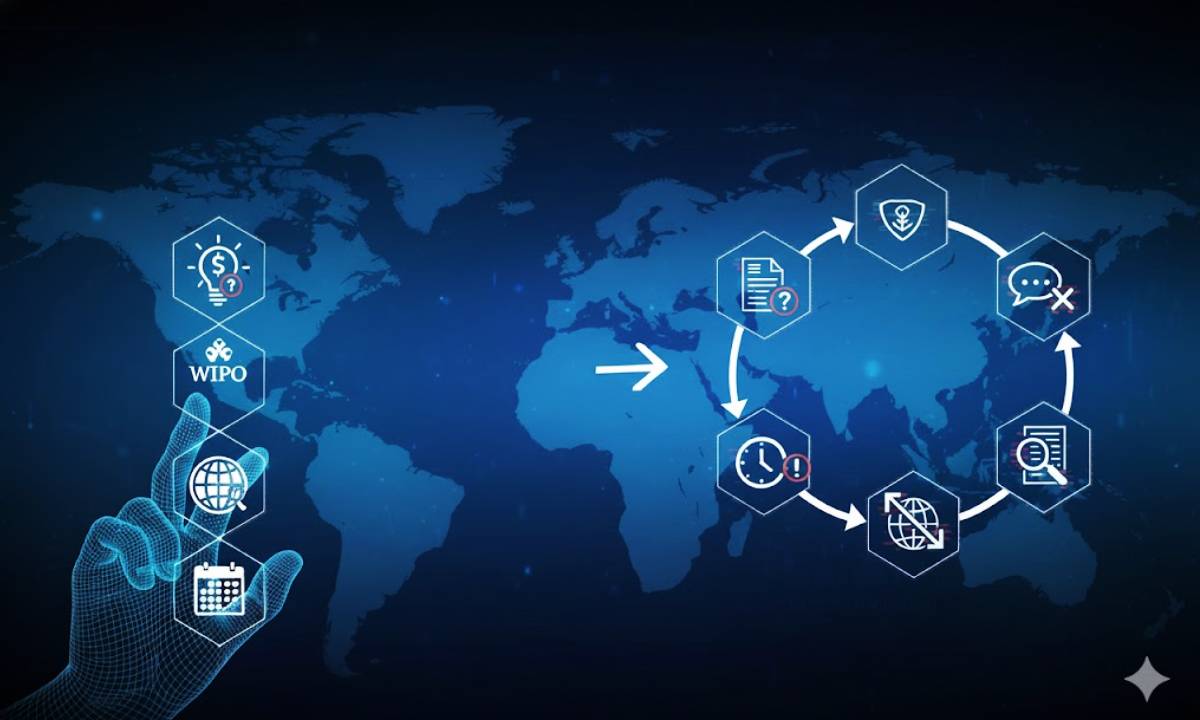
Innovation from Indian start-ups has expanded rapidly across sectors such as artificial intelligence, biotechnology, fintech, and advanced manufacturing. As these companies scale beyond domestic markets, protecting technology in foreign jurisdictions becomes a strategic priority. International patent filing for Indian start-ups is therefore an important step for securing intellectual property rights and maintaining competitive advantage in global markets.
A patent granted in India protects an invention only within the territorial boundaries of the country. If a start-up plans to commercialise its technology internationally, it must seek patent protection in other jurisdictions. This process involves careful planning, compliance with international procedures, and strategic selection of countries where the invention may have commercial value.
Understanding the correct process for international patent filing helps start-ups avoid legal risks and ensures their innovation receives proper protection across global markets.
Understanding the Need for International Patent Protection
Start-ups often begin with a domestic patent application in India. However, once the business begins expanding into international markets, domestic protection alone may not be sufficient. Patents operate on a territorial principle. Each country grants patent rights independently under its own national laws. As a result, an Indian patent does not automatically provide protection in other countries.
International patent protection allows start-ups to prevent competitors from manufacturing, selling, or using their technology in foreign markets. It also strengthens licensing opportunities and improves the overall valuation of the company.
Information regarding patent filing procedures and regulations in India can be accessed through the official portal of the Office of the Controller General of Patents Designs and Trade Marks. This government platform provides guidelines on patent applications, examination procedures, and intellectual property policies in India.
International Patent Filing for Indian Startups
When planning International patent filing for Indian start-ups, businesses must choose a suitable filing route and prepare strong patent documentation. Two major pathways exist for obtaining patent protection outside India. One option involves direct filing in individual foreign countries. The second option involves filing an international application through the Patent Cooperation Treaty system. Each route serves different strategic objectives depending on the start-up’s market expansion plans and financial resources.
Initial Step: Filing a Patent Application in India
Most start-ups begin by filing a patent application in India before pursuing international protection. This first filing establishes a priority date for the invention. The priority date is important because it determines the novelty of the invention during examination. Once the initial application is filed, the applicant receives a twelve month period to seek protection in other countries under the Paris Convention. During this period, start-ups can evaluate the commercial potential of the invention and determine where international protection may be required.
Filing International Applications Through the PCT System
Many start-ups choose the Patent Cooperation Treaty system when seeking international patent protection. The PCT system allows applicants to file a single international patent application recognised by more than one hundred and fifty countries.
The international application does not grant a global patent. Instead, it creates a structured procedure for seeking protection in multiple jurisdictions through one filing process. Detailed information regarding this international system is available through the Patent Cooperation Treaty information portal of the World Intellectual Property Organization.
For start-ups, the PCT route offers several practical advantages. It provides additional time before entering national phase filings in foreign countries. This extended timeline allows founders to assess international markets, refine business models, and attract investment. During the international phase, the application undergoes a prior art search conducted by an authorised international searching authority. This process produces a search report and written opinion regarding the patentability of the invention.
Such feedback helps start-ups evaluate the strength of their invention before committing to expensive national phase filings.
Direct Foreign Patent Filing
Another approach for international patent filing involves submitting separate patent applications in individual countries. This route may be suitable when start-ups clearly know the countries where they plan to operate. For example, a company may focus on markets such as the United States, Europe, or specific Asian countries where demand for the technology exists.
Direct filing requires separate documentation, translation, and local attorney involvement in each jurisdiction. While this approach may involve higher administrative effort, it can sometimes accelerate examination procedures in specific countries. Start-ups must therefore assess both routes carefully before deciding on an international filing strategy.
Importance of a Strong Patent Specification
A well drafted patent specification forms the foundation of any international patent application. The specification must describe the invention clearly and include sufficient technical detail. Patent examiners rely on this document to evaluate novelty, inventive step, and industrial applicability. If the specification lacks clarity or technical detail, the application may face objections during examination.
Start-ups should therefore ensure their patent documents explain the invention thoroughly and include appropriate technical drawings or examples where required. Professional guidance often becomes valuable during this stage. Many companies consult International patent filing lawyers when preparing international applications to ensure the specification meets legal standards across multiple jurisdictions.
Strategic Selection of Target Countries
Choosing the right countries for patent protection is an important strategic decision for start-ups. Patent filing costs increase significantly when applications enter multiple jurisdictions. Businesses should therefore evaluate market demand, manufacturing locations, and potential licensing opportunities before selecting countries for national phase filings.
For example, if a start-up manufactures products in one country but sells them globally, patent protection may be required in both production and sales markets. Careful country selection helps start-ups manage intellectual property costs while maintaining strong protection in key markets.
Funding Considerations for International Patent Protection
International patent protection can involve significant expenses. Filing fees, translation costs, examination charges, and attorney fees may accumulate across multiple jurisdictions. Start-ups should therefore plan their patent budgets carefully and integrate intellectual property protection into broader business strategies.
Some government initiatives and start-up support programmes in India encourage innovation and provide assistance for intellectual property filings. Exploring such initiatives may help start-ups manage costs associated with international patent protection.
Importance of Professional Patent Guidance
International patent law involves complex procedural requirements. Each country has its own patent examination standards, documentation rules, and language requirements. Professional legal guidance helps start-ups navigate these requirements effectively. Patent professionals assist with drafting specifications, conducting prior art searches, and managing international filing procedures.
Many technology companies rely on experienced patent attorneys in India when developing international intellectual property strategies. Their expertise helps ensure compliance with procedural requirements and strengthens the overall patent portfolio of the company.
Role of Patents in Start-up Growth
Intellectual property often forms the core asset of technology driven start-ups. A strong patent portfolio can attract investors, support licensing agreements, and create barriers for competitors. International patent protection also enhances credibility when start-ups enter foreign markets. Investors and business partners often evaluate the strength of a company’s intellectual property before committing resources. Therefore, start-ups should view international patent filing not only as a legal process but also as a strategic investment in long term business growth.
Conclusion
International patent filing for Indian start-ups plays a vital role in protecting innovation and supporting global expansion. As Indian technology companies continue to grow in international markets, securing patent rights in multiple jurisdictions becomes increasingly important.
Start-ups may pursue international protection either through direct foreign filings or through the Patent Cooperation Treaty system. Each route offers different advantages depending on the business strategy and target markets.
Careful planning, strong patent documentation, and professional legal guidance can significantly improve the success of international patent applications. By adopting a strategic approach to intellectual property protection, Indian start-ups can safeguard their innovations while building sustainable global businesses.
FREQUENTLY ASKED QUESTIONS (FAQS)
How can Indian start-ups apply for international patents?
Indian start-ups can apply for international patents by first filing a patent application in India and then using the PCT (Patent Cooperation Treaty) route. This allows them to seek patent protection in multiple countries through a single international application.
Is it mandatory for Indian start-ups to file a patent in India first?
In most cases, Indian start-ups must file a patent application in India or obtain a Foreign Filing License from the Indian Patent Office before filing a patent application in other countries.
What is the benefit of using the PCT route for international patents?
The PCT route simplifies the process of applying for patent protection in multiple countries. It provides additional time for start-ups to evaluate the commercial potential of their invention before entering national patent phases.
How long does the international patent process take for Indian start-ups?
The PCT process usually provides up to 30–31 months from the priority date for applicants to enter national phases in different countries, giving start-ups time to plan their international patent strategy.
What documents are required for filing an international patent from India?
Common documents include a complete patent specification, details of the inventor and applicant, patent claims, drawings (if applicable), and necessary forms required by the Indian Patent Office or the PCT system.