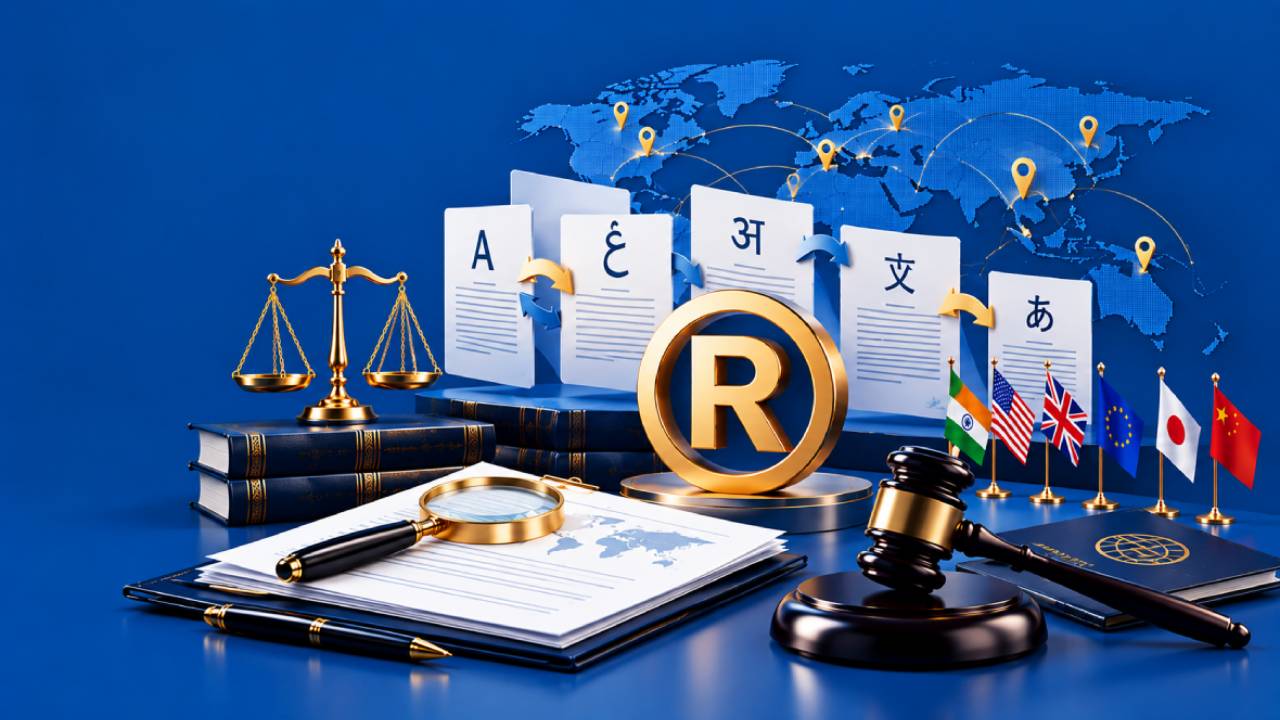
International brand expansion involves more than selecting countries and filing trademark applications. Language can affect how a mark is understood, examined, searched and protected in each market. Trademark Translation is especially important where a brand contains foreign words, non Latin characters or goods and services descriptions requiring translation. A translation is not simply a linguistic exercise. It can influence trademark distinctiveness, similarity assessments and the scope of an application. Different trademark offices also follow different requirements. The United States Patent and Trademark Office, for example, can require English translations of foreign wording and transliterations of non Latin characters. For businesses seeking international protection, understanding these language issues before filing can prevent avoidable objections and help create a stronger global trademark portfolio.
Why Does Language Matter in International Trademark Registration?
Trademark rights depend partly on how consumers perceive a mark. A word which appears distinctive in one language may have a descriptive, generic or misleading meaning in another. Consider a fictional brand called “LUMI”. It may have no obvious meaning in one country but could resemble a descriptive or commonly understood term elsewhere. Similarly, a brand written in Chinese, Arabic, Japanese or another non Latin script may have a particular meaning, pronunciation or commercial impression when used in another market.
Trademark offices may examine these linguistic characteristics when determining registrability. Translation can also affect trademark searches. A foreign word may need to be searched according to its translated meaning, while a mark written in a different script may need to be assessed through its transliteration or pronunciation. This means an international clearance search should not rely solely on an identical spelling.
What Is Trademark Translation?
Trademark Translation refers to converting the verbal meaning of a trademark or relevant application material from one language into another for examination, filing or administrative purposes. It is important to distinguish translation from transliteration. Translation communicates the meaning of a word. Transliteration represents the pronunciation of words written in another script using another writing system. For example, a Chinese character may have a particular pronunciation and meaning. A trademark office may require both the transliteration and an English translation. The USPTO expressly requires an English translation where an application contains non English wording and can require transliteration and translation where non Latin characters appear. The distinction becomes important because two marks can have different visual appearances while producing similar linguistic or conceptual impressions.
How Translation Affects Trademark Examination
Trademark offices examine applications according to their national or regional laws. Language can become relevant during both absolute and relative grounds examination. An examiner may ask whether a foreign word describes the goods or services. The examiner may also investigate whether a translated meaning creates similarity with an earlier trademark. The USPTO provides a useful example of how this works. Its examination guidance states that non English wording generally needs to be translated into English. It also explains that the meaning of foreign wording may need to be established before searching for conflicting marks. This can have practical consequences. A brand owner may believe a foreign word is sufficiently different from an existing English mark. However, if consumers are likely to understand the foreign word as the equivalent of the English term, the examiner may consider the relationship between the marks.
The US doctrine of foreign equivalents illustrates this principle. The USPTO explains that foreign wording can be translated into English when assessing issues including descriptiveness and likelihood of confusion. It also makes clear the doctrine is a guideline rather than an automatic rule.
Translation and the Madrid System
The Madrid System provides a centralised route for seeking trademark protection in multiple participating jurisdictions. However, it does not remove the need to consider language requirements in individual markets. WIPO explains that an international application may include a translation of words in the mark into English, French and Spanish, or one or two of these languages. WIPO itself does not translate the mark when processing the international registration.
This is different from translations relating to goods and services. WIPO’s Madrid Goods and Services Manager provides accepted terminology and translation functionality for goods and services descriptions. The tool supports the three Madrid System languages as well as other languages and allows applicants to check acceptance in certain member offices. Businesses should therefore distinguish between translating the trademark itself and translating the wording used to describe the goods and services.
How Foreign Language Marks Are Treated in the United States
The United States has detailed requirements concerning foreign wording. The USPTO states that foreign wording in a mark generally requires an English translation. If a mark contains non Latin characters, the applicant may also need to provide a transliteration and an English translation of the transliterated wording. The translation can also become relevant to the search for earlier marks. The USPTO explains that an examining attorney may need to determine the meaning of foreign wording before completing the search because a foreign equivalent can be relevant to descriptiveness and likelihood of confusion.
The applicant should therefore avoid treating the translation statement as a minor administrative requirement. A carefully prepared translation can help ensure the application accurately reflects the meaning of the mark and reduces the risk of an avoidable examination issue.
Translation of Goods and Services Descriptions
Language issues do not only concern the trademark itself. Goods and services descriptions can create significant problems in international applications. The wording used to identify goods and services must be sufficiently precise. A term which is widely understood in one country may be considered vague or unacceptable in another. WIPO’s Madrid Goods and Services Manager is designed to help applicants select appropriate terminology. WIPO explains that using pre accepted terms can help applicants avoid irregularity letters from the International Bureau. The tool also provides translations and allows users to check acceptance by participating offices.
This is especially important for businesses in technology sectors. Terms relating to software, artificial intelligence, digital platforms, virtual products and technology services can have different interpretations depending on the market. A direct word for word translation may therefore be less useful than a legally appropriate description accepted by the relevant trademark office.
Why Literal Translation Can Create Problems
A literal translation may appear accurate but fail to communicate the intended commercial meaning. Words can have several meanings depending on context. Some expressions also have cultural associations which are not obvious from a dictionary definition.
For example, a brand name may be a coined expression in its home market but resemble an ordinary word in another language. A translation can reveal an unwanted meaning or a possible conflict with an existing trademark. The USPTO recognises this issue in its guidance. Its rules explain that where a translation has several possible meanings, only a clear and exact equivalent may be suitable for publication on the registration certificate. This demonstrates why professional linguistic review can be important for international filings.
Translation, Transliteration and Non Latin Scripts
Brands using non Latin scripts require particular care. A trademark written in Arabic, Chinese, Japanese, Korean, Hindi or another script can have several relevant representations. The visual form may be protected as a design element, while its spoken form and meaning can create separate issues. A transliteration can help a trademark office understand pronunciation. A translation can explain meaning. Neither necessarily replaces the original representation of the mark.
The USPTO specifically requires transliteration for certain marks containing non Latin characters and may require an English translation of the transliterated wording. International applicants should therefore identify all relevant linguistic elements before filing rather than responding only after an examiner raises the issue.
How Translation Can Affect Trademark Searches
Trademark searching is one of the most important stages before international registration. A basic search for the exact spelling of a brand may miss potential conflicts. Foreign equivalents, transliterations and alternative spellings can all matter.WIPO recommends using its Global Brand Database to identify similar or identical marks across multiple national and international databases. WIPO also cautions that database results do not establish whether a mark is legally available for registration and recommends a full clearance search where appropriate.
A thorough international search should therefore consider the relevant languages used in the target markets. For example, an Indian business planning international trade mark registration may need to assess not only its original brand name but also its meaning, translation and transliteration in each important destination market.
Translation Can Influence Likelihood of Confusion
Two marks do not necessarily need to look identical to create a potential trademark conflict. They can be conceptually similar because consumers understand them as having the same meaning. Translation can therefore become relevant when comparing marks. The USPTO’s guidance on the foreign equivalents doctrine explains how foreign wording can be translated and compared with English wording when considering likelihood of confusion. The approach is not universal. Each jurisdiction has its own legal tests. Some offices may give more weight to conceptual similarity, while others may focus heavily on visual or phonetic similarities. Businesses should therefore avoid assuming a translated equivalent will always be treated in the same way across countries.
Cultural Meaning Can Be as Important as Linguistic Meaning
Translation should not be considered in isolation from culture. A word can have a harmless meaning in one country but an undesirable association in another. Certain colours, symbols, expressions and names can also carry different meanings across cultures. This can create branding problems even when a trademark is legally registrable. Before entering a new market, businesses should examine whether the proposed mark has a negative, offensive or misleading meaning in the local language. They should also consider pronunciation and how local consumers are likely to perceive the brand. This type of linguistic and cultural due diligence can be especially important for businesses entering multiple markets simultaneously.
Translation Problems Can Lead to Examination Objections
Incorrect or incomplete translations can contribute to examination difficulties. An examiner may request clarification of the meaning of foreign wording. The office may also require a translation statement or transliteration. In some jurisdictions, inaccurate descriptions of goods and services can create provisional refusals. WIPO has highlighted translation and descriptions of goods and services as common reasons for provisional refusals in certain Madrid System jurisdictions. In its discussion of Chilean practice, INAPI identified translation and goods and services descriptions among the most common reasons for provisional refusal. This illustrates an important point. Translation is not merely a filing formality. It can influence whether an application proceeds smoothly through examination.
How Businesses Can Reduce Translation Risks
Businesses should begin linguistic review before filing the trademark application. The first stage should involve identifying every word, phrase and character forming part of the mark. The applicant should determine whether each element has a recognised meaning and whether it requires translation or transliteration in the target jurisdiction. The goods and services specification should then be reviewed separately. Applicants should use accepted terminology wherever possible rather than relying on informal commercial descriptions. WIPO’s Global Goods and Services Terms Explorer can assist applicants in identifying appropriate terms and their Nice Classification in different languages. A legal review should follow the linguistic assessment. This helps determine whether the translated meaning creates a potential conflict with an existing mark.
Why Professional Translation Matters for Global Brands
Machine translation can be useful for preliminary research, but it should not automatically be treated as a final legal translation. Trademark language often involves context, commercial meaning and subtle distinctions. A technically correct translation may still fail to capture how consumers understand a word. Professional review is particularly useful where the mark is coined, culturally sensitive, written in a non Latin script or capable of multiple meanings. Businesses should also preserve consistency across applications. Different translations of the same mark can create confusion in internal records and may complicate future portfolio management. Where a brand is being filed across several markets, coordination between linguistic specialists and trademark professionals can help maintain accuracy.
Translation and International Trademark Strategy
Language should form part of the trademark strategy from the beginning. Businesses should identify priority countries, examine local languages and assess whether the proposed mark has suitable commercial meaning in each market. Searches should include relevant translated terms and transliterations. The filing strategy should then reflect the actual form of the brand used in each market. In some cases, businesses may choose to register both the original mark and a local language version. In other cases, a translated mark may be unsuitable or commercially unnecessary. The correct approach depends on the brand, market and legal position. For Indian businesses expanding internationally, advice from trademark lawyers can assist with coordinating domestic rights, international filing plans and potential language related risks before the brand enters overseas markets.
What Happens If a Translation Is Incorrect?
The consequences depend on the jurisdiction and the nature of the error. A minor administrative mistake may be capable of correction. A materially incorrect translation can create a substantive examination issue if it affects how the mark is assessed. An incorrect translation can also result in an incomplete trademark search. If the translated meaning is not identified, a potentially conflicting earlier mark may be overlooked. In the United States, for example, the USPTO requires translation information for foreign wording in relevant applications. It also considers the meaning of foreign wording when conducting searches and evaluating registrability. Applicants should therefore correct translation issues promptly when an office raises them.
Conclusion
Language plays an important role in international trademark protection. A mark can have different meanings, pronunciations and commercial impressions across countries. Translation and transliteration can therefore influence examination, searching, classification and the assessment of potential conflicts. The Madrid System provides useful tools for managing international filings, including resources for translating and checking goods and services terminology. However, individual trademark offices retain their own examination requirements. Businesses should conduct linguistic and legal checks before filing. They should assess the meaning of the mark in important markets, review non Latin characters, use appropriate goods and services terminology and search relevant translated equivalents. Careful preparation can reduce examination delays and help businesses build stronger international trademark portfolios.
FREQUENTLY ASKED QUESTIONS (FAQS)
What is Trademark Translation?
Trademark Translation involves translating the verbal elements of a trademark or relevant application information into another language for filing, examination or administrative purposes. Requirements vary between trademark offices.
Is trademark translation required for international registration?
It can be required depending on the trademark, filing route and destination country. Under the Madrid System, applicants can provide translations of words in the mark into English, French and Spanish. Individual designated offices may also have their own language requirements.
What is the difference between translation and transliteration?
Translation communicates the meaning of a word in another language. Transliteration represents the pronunciation of wording written in one script using another script. A trademark containing non Latin characters may require transliteration as well as translation in some jurisdictions.
Does the USPTO require translation of foreign trademarks?
The USPTO generally requires an English translation where a mark contains non English wording. Non Latin characters can also require transliteration and an English translation of the transliterated wording.