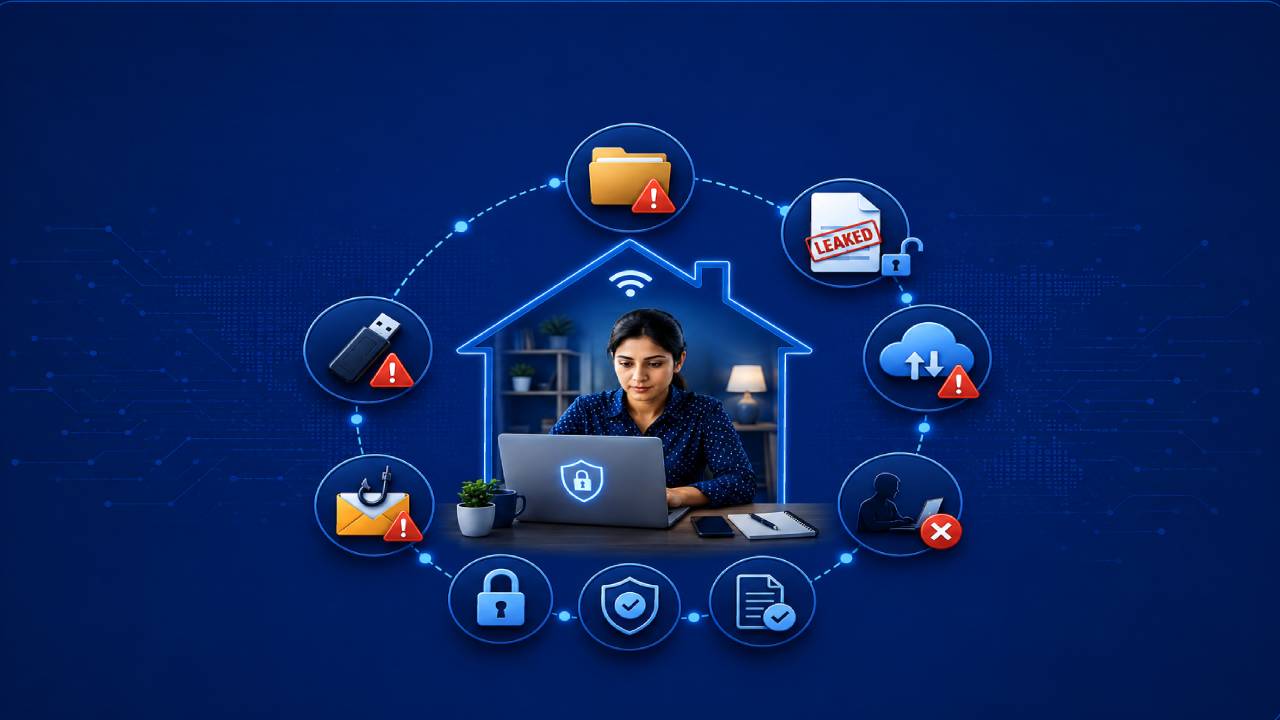
The rise of hybrid and flexible employment models has changed how businesses manage confidential information, inventions, and digital assets. As organisations continue adapting to decentralised operations, concerns linked to remote work IP risks have increased across India’s corporate and startup sectors. Businesses now face growing exposure to data leakage, unauthorised access, copyright misuse, trade secret theft, and ownership disputes involving employee created work.
Remote work has improved efficiency and flexibility for many organisations. However, it has also widened the attack surface for intellectual property related threats. Companies operating without structured digital governance may struggle to protect commercially valuable information. In India, where digital transformation is rapidly expanding across industries, remote work related intellectual property concerns now require greater legal and operational attention.
Understanding Remote Work and Intellectual Property Exposure
Intellectual property includes inventions, software code, trademarks, designs, confidential business information, research data, and proprietary processes. When employees work from home or from remote locations, organisations lose some level of direct control over how this information is accessed, stored, transferred, or shared. Many companies shifted to remote work quickly without implementing proper legal safeguards or cybersecurity frameworks. Personal devices, unsecured internet networks, cloud sharing platforms, and informal communication channels created new vulnerabilities. These risks affect businesses of every size, including startups, technology companies, consulting firms, pharmaceutical organisations, media agencies, and manufacturing enterprises. India’s growing digital economy has further increased dependence on collaborative online platforms. As a result, businesses must now address remote work related intellectual property protection as part of broader corporate risk management.
Why Remote Work IP Risks Are Increasing in India
The increase in remote employment models has coincided with greater use of cloud computing, artificial intelligence tools, online collaboration software, and remote access systems. Employees frequently access sensitive files outside secured office environments. This shift has exposed companies to both intentional and accidental intellectual property violations. One major concern involves employees storing company data on personal devices. In many cases, businesses fail to implement adequate device monitoring policies or data access controls. If an employee leaves the organisation, confidential files may remain accessible without authorisation.
Another growing issue relates to freelance and contractual workers. Many Indian businesses engage remote consultants or outsourced professionals without clear intellectual property ownership clauses. This creates uncertainty regarding copyright ownership, software development rights, and use of proprietary information. Cybersecurity threats also contribute significantly to remote work IP risks. Phishing attacks, ransomware incidents, and unauthorised data sharing continue affecting businesses globally.
Confidential Information and Trade Secret Leakage
Trade secrets represent one of the most vulnerable categories of intellectual property in remote work environments. Client databases, product formulas, pricing strategies, internal research documents, and business plans can easily be copied or transferred digitally. Unlike patents or trademarks, trade secrets depend heavily on confidentiality measures for protection. If businesses fail to demonstrate reasonable safeguards, legal enforcement becomes more difficult. Remote work environments often weaken practical control over sensitive information.
Employees working remotely may use personal email accounts, unsecured Wi Fi connections, or third party storage platforms. Family members or shared living environments may unintentionally expose confidential discussions or documents. Even simple practices such as downloading files onto personal laptops can create substantial legal and commercial risks. The Information Technology Act, 2000 and contractual confidentiality agreements play an important role in addressing misuse of sensitive business information in India. Organisations should regularly update remote work policies to reflect evolving technological and operational realities.
Ownership Disputes Over Employee Created Work
Remote work arrangements have complicated ownership rights involving software development, creative content, inventions, and research material. Employers often assume ownership over work produced during employment. However, unclear contracts can create disputes regarding intellectual property created outside standard office conditions. For example, software developers working remotely may use personal tools, private repositories, or external resources while creating code. Without clear contractual provisions, disagreements may arise concerning ownership and licensing rights.
Freelancers and independent contractors present additional challenges. Under Indian copyright law, ownership may not automatically transfer to the hiring company unless written agreements clearly assign intellectual property rights. Businesses increasingly seek guidance from intellectual property lawyers in india to structure employment contracts, consultancy agreements, and remote work policies that clearly define ownership rights and confidentiality obligations.
Cybersecurity Risks Affecting Intellectual Property
Cybersecurity failures remain among the most serious consequences of poorly managed remote work systems. Intellectual property theft is no longer limited to physical documents or internal misconduct. Digital attacks can expose valuable commercial information within minutes. Hackers often target remote employees through phishing emails, fake login portals, or malware infected files. Once attackers gain access to company systems, they may steal proprietary software, research data, trademarks, customer information, or confidential business strategies.
The Government of India has repeatedly encouraged organisations to strengthen cybersecurity compliance and digital infrastructure. Companies handling sensitive intellectual property should implement multi factor authentication, restricted access systems, encrypted communication channels, and employee cybersecurity training programmes. Legal compliance alone is insufficient without practical technological safeguards.
Copyright and Software Misuse in Remote Environments
Remote work culture has increased dependence on digital tools, collaborative software, and online content sharing platforms. Employees may unknowingly use unlicensed software, copyrighted material, or unauthorised databases during remote operations. In some situations, remote employees install pirated applications on personal devices used for official work. This creates legal exposure for businesses and may lead to copyright infringement claims. Unauthorised use of copyrighted images, presentations, or software code can also damage corporate reputation and trigger financial liability. Indian businesses should establish clear acceptable use policies covering software licensing, digital content usage, and intellectual property compliance. Regular audits and employee awareness programmes can significantly reduce these risks.
Data Privacy and Cross Border Information Transfers
Remote work frequently involves cloud storage systems and international collaboration tools. Many businesses transfer sensitive data across jurisdictions without fully understanding regulatory implications. Although India’s data protection framework continues evolving, organisations already face growing expectations regarding responsible data handling practices. Improper sharing of client information, confidential research, or employee data may create legal complications alongside intellectual property concerns. Remote employees working from different states or countries can further complicate jurisdictional issues involving intellectual property enforcement and contractual disputes. Businesses should ensure employment agreements clearly define governing law, dispute resolution mechanisms, and confidentiality obligations.
Importance of Employment Policies and Legal Documentation
Strong documentation remains one of the most effective ways to reduce remote work IP risks. Businesses should create comprehensive remote work policies tailored to operational realities and industry specific risks. These policies should address confidentiality standards, ownership of work product, device usage, cybersecurity practices, permitted software, data retention, and employee exit procedures. Organisations should also ensure employment contracts contain enforceable intellectual property clauses. Periodic legal review becomes essential as technology and remote working practices continue changing. Companies operating in technology, pharmaceutical, manufacturing, and digital service sectors often engage trademark attorneys in india and intellectual property professionals to strengthen brand protection and digital asset management strategies.
Practical Steps Businesses Can Take
Businesses should adopt a balanced approach combining legal, technical, and operational safeguards. Remote work policies should remain practical and regularly updated rather than existing merely as formal documentation.
Some important measures include:
- Using secure virtual private networks and encrypted systems
- Restricting access based on employee roles
- Conducting regular cybersecurity training
- Implementing intellectual property ownership clauses in contracts
- Monitoring file access and data sharing activity
- Performing software compliance audits
- Establishing employee exit and data return procedures
Companies should also create clear reporting mechanisms for suspected intellectual property breaches or cybersecurity incidents.
The Future of Remote Work and Intellectual Property Protection
Remote and hybrid working models are likely to remain integral to India’s business environment. As organisations continue embracing digital operations, intellectual property protection will become increasingly connected with cybersecurity, employment law, and technology governance. Businesses can no longer treat intellectual property protection as a concern limited to patents or trademarks alone. Modern risks involve digital collaboration systems, remote communication tools, cloud infrastructure, and employee conduct outside traditional office spaces. Companies adopting proactive legal and technological strategies will be better positioned to protect innovation, maintain client trust, and reduce operational disruption. Effective management of remote work IP risks now forms a critical part of long term business sustainability in India.
FREQUENTLY ASKED QUESTIONS (FAQS)
What are remote work IP risks?
Remote work IP risks refer to threats involving theft, misuse, leakage, or unauthorised sharing of intellectual property during remote or hybrid work arrangements. These risks may involve confidential information, software code, trademarks, trade secrets, or copyrighted material.
Why are Indian companies concerned about intellectual property in remote work settings?
Indian companies face increased exposure to cybersecurity attacks, confidential information leaks, ownership disputes, and employee misuse of digital resources due to decentralised work environments and growing reliance on online collaboration tools.
Can employers claim ownership over work created by remote employees?
In many cases employers may claim ownership if employment contracts clearly assign intellectual property rights. However, unclear agreements may create disputes, especially involving freelancers or independent contractors.
How can businesses protect confidential information during remote work?
Businesses can reduce risks by using encrypted systems, restricted access controls, secure networks, confidentiality agreements, cybersecurity training, and properly drafted employment contracts.