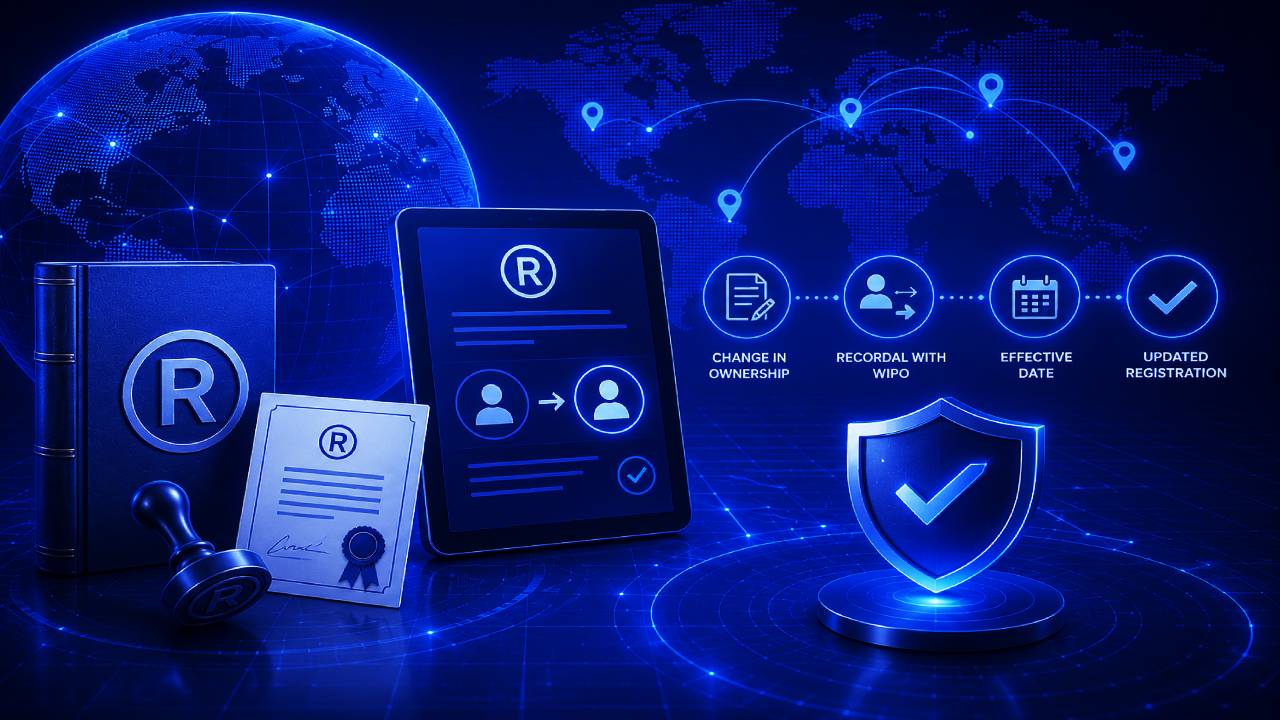
Trade marks are valuable business assets and, like any other form of intellectual property, ownership can change over time. Businesses merge, brands are sold, corporate restructuring takes place, and intellectual property portfolios are transferred as part of commercial transactions. When an internationally registered trade mark changes hands, it is important to ensure the ownership details are officially updated. Understanding the Madrid Protocol Ownership Change procedure helps businesses maintain accurate records, preserve legal rights, and avoid future disputes. Recording ownership changes correctly under the Madrid System ensures the new owner can effectively manage, enforce, renew, and commercialise the international registration.
The Madrid System simplifies international trade mark protection across multiple member countries through one central registration. It also provides a centralised mechanism for recording ownership changes without requiring separate applications in every designated jurisdiction, subject to the applicable legal requirements.
Understanding the Madrid System
The Madrid System is administered by the World Intellectual Property Organization (WIPO). It enables businesses and individuals to protect trade marks in multiple member countries through one international registration. The system also allows trade mark owners to manage various post registration matters centrally. These include renewals, changes of name or address, limitations, subsequent designations, cancellations, and ownership changes. Applicants and trade mark owners can refer to the official World Intellectual Property Organization Madrid System for procedural guidance, forms, and international registration services.
Madrid Protocol Ownership Change Explained
The Madrid Protocol Ownership Change process refers to the official recording of a transfer of ownership for an international trade mark registration in the International Register maintained by WIPO.
Ownership may change for several commercial or legal reasons. Once the transfer satisfies the applicable legal requirements, WIPO records the new owner’s details in the International Register and notifies the designated member countries.
This centralised process reduces administrative work compared with recording ownership separately in every jurisdiction covered by the international registration.
When Does Ownership Change Occur?
Ownership changes arise in a wide range of business situations.
Common examples include:
- Sale of a trade mark.
- Business acquisition.
- Corporate merger.
- Internal group restructuring.
- Assignment of intellectual property rights.
- Transfer through succession.
- Transfer following insolvency proceedings.
Regardless of the reason, recording the new owner correctly is essential to maintain an accurate international registration.
Why Recording Ownership Matters
A trade mark registration reflects the legal owner of the intellectual property. If ownership records remain outdated, practical and legal complications may arise. The registered owner is generally recognised for purposes including renewals, licensing, enforcement, assignments, and other administrative actions. Accurate ownership records also provide certainty for business partners, investors, distributors, and licensing arrangements. Failure to record ownership promptly may create unnecessary legal uncertainty during commercial transactions.
Who Can Become the New Owner?
The Madrid Protocol permits ownership transfers only where the new owner satisfies the eligibility requirements of the Madrid System. Generally, the new owner must possess a qualifying connection with a Madrid System member. This connection may arise through nationality, domicile, or a genuine commercial establishment within a member country. If these eligibility conditions are not satisfied, WIPO may be unable to record the ownership change. Applicants should therefore verify eligibility before completing commercial transactions involving international registrations.
How the Ownership Change Process Works
The ownership change procedure begins after the parties complete the legal transfer of the trade mark. An appropriate request is submitted to WIPO together with the required information relating to the international registration, the previous owner, and the new owner. Following examination of the request, WIPO records the ownership change if all procedural requirements have been satisfied. The International Bureau then notifies the designated member countries where the international registration remains protected. The official procedural requirements are explained through the WIPO Madrid System guidance, including forms, recording procedures, and portfolio management services.
Can Ownership Be Transferred for Only Some Countries?
Yes.
The Madrid System permits partial changes in ownership under certain circumstances.
For example, ownership may be transferred only for designated countries included within the international registration while the original owner retains ownership in the remaining jurisdictions.Similarly, ownership may also be transferred for only certain goods or services where legally permitted. This flexibility allows businesses to structure commercial transactions according to specific licensing arrangements, acquisitions, or regional business strategies.
Recording Partial Assignments
Partial assignments are common during international business expansion. A business may sell brand rights relating only to one geographical market while retaining ownership elsewhere. Another example involves transferring rights relating only to selected goods or services while maintaining ownership for the remainder of the specification. The Madrid System accommodates these commercial arrangements through appropriate recording procedures where the legal requirements are fulfilled.
Official Fees for Recording Ownership Changes
Recording a Madrid Protocol Ownership Change generally involves payment of an official fee to WIPO. The applicable fee relates to recording the ownership change in the International Register rather than filing new national applications. Applicants should always verify the latest official fee schedule before submitting a request because fee amounts may change periodically. The WIPO Fee Calculator and official Schedule of Fees provide updated information regarding applicable charges. Businesses managing WIPO international trademark registration portfolios should also monitor future administrative fees associated with renewals, subsequent designations, and recordal requests to support efficient portfolio management.
Benefits of Recording Ownership Centrally
One of the greatest advantages of the Madrid System is administrative simplicity. Instead of filing separate ownership recordals before every national intellectual property office, applicants generally submit one central request through WIPO.
Key advantages include:
- Simplified administration.
- Consistent ownership records.
- Reduced paperwork.
- Easier portfolio management.
- Central notification to designated member countries.
- Improved legal certainty.
These efficiencies become increasingly valuable for businesses managing large international trade mark portfolios across multiple jurisdictions.
Common Mistakes Businesses Should Avoid
Several common errors may delay recording ownership changes. Businesses sometimes submit incomplete information relating to the international registration. Others overlook eligibility requirements applying to the new owner. Delays may also arise where assignment documents contain inconsistencies or ownership details differ from those appearing within the International Register. Promptly reviewing documentation before submission helps reduce administrative delays. Professional advice may also assist where complex international restructuring transactions are involved.
Ownership Change Does Not Automatically Create New Rights
Recording an ownership change updates the identity of the registered owner. It does not create a new trade mark registration or extend protection into additional countries. The international registration continues with its original filing date, registration date, designated countries, and legal status. Only the ownership information changes following successful recordal. This distinction is important when businesses purchase international trade mark portfolios during mergers or acquisitions.
Practical Considerations for International Businesses
Businesses expanding internationally frequently acquire brands through acquisitions rather than developing entirely new trade marks. Recording ownership changes promptly ensures future renewals, licensing agreements, enforcement actions, and commercial negotiations proceed without unnecessary administrative complications. Companies investing in foreign trademark registration strategies should also establish internal procedures for monitoring ownership records whenever corporate restructuring, acquisitions, or intellectual property transfers occur. Maintaining accurate records strengthens legal certainty while supporting long term international brand management.
Conclusion
The Madrid Protocol Ownership Change procedure provides an efficient mechanism for updating ownership details following assignments, mergers, acquisitions, restructuring, or other commercial transactions involving international trade mark registrations. Rather than recording ownership separately in every designated jurisdiction, the Madrid System enables businesses to manage ownership changes centrally through WIPO, subject to the applicable legal requirements.
Accurate ownership records remain essential for enforcing trade mark rights, managing renewals, entering licensing arrangements, and maintaining confidence among commercial partners. By understanding the ownership recordal process, verifying eligibility requirements, preparing accurate documentation, and filing requests promptly, businesses can protect the integrity of their international trade mark portfolios while supporting continued global expansion.
FREQUENTLY ASKED QUESTIONS (FAQS)
What is a Madrid Protocol Ownership Change?
A Madrid Protocol Ownership Change is the official recording of a transfer of ownership for an international trade mark registration maintained by the World Intellectual Property Organization.
Why should ownership changes be recorded?
Recording ownership ensures the International Register accurately reflects the legal owner of the trade mark, supporting renewals, licensing, enforcement, and future commercial transactions.
Can ownership be transferred for only selected countries?
Yes. Under certain circumstances, ownership may be transferred for specific designated member countries while the original owner retains rights in other jurisdictions.
Does WIPO approve every ownership transfer automatically?
No. WIPO examines whether the request satisfies the procedural and eligibility requirements before recording the ownership change.